Open source · Apache 2.0 · v1.0
Minutes that write
next week's agenda
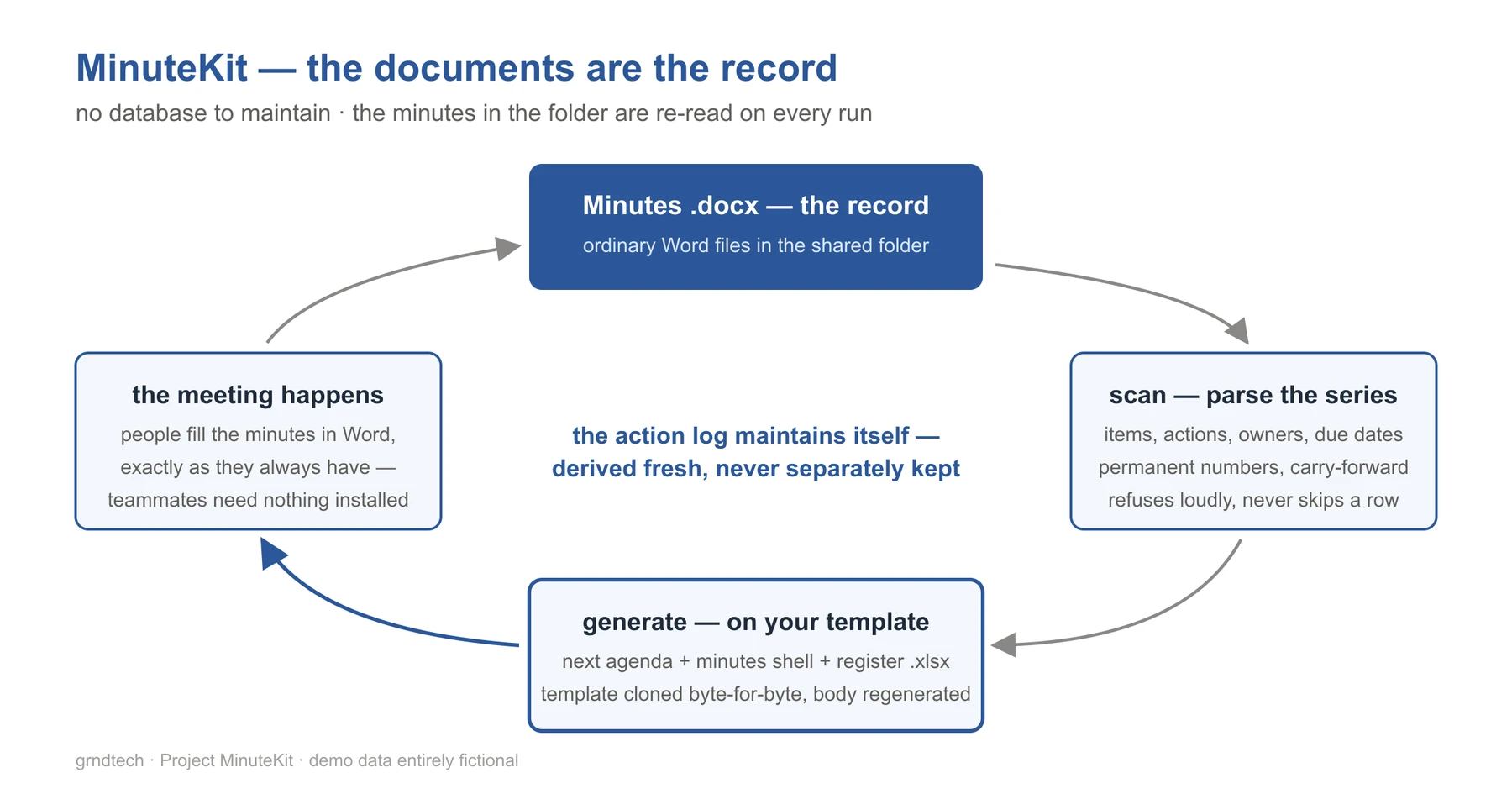
MinuteKit keeps no database — the Word minutes in the meeting folder are the record. It re-reads them on every run, carries open items and actions forward under permanent numbers, and generates the next agenda and a pre-filled minutes shell on your own template. Pure standard-library Python; teammates without it just keep using Word.
What you're downloading
This is code you adapt to your own minutes format with an AI coding assistant — Claude Code, Cursor, or Codex — not a turnkey app. The repo carries a CLAUDE.md/AGENTS.md map written for exactly that.
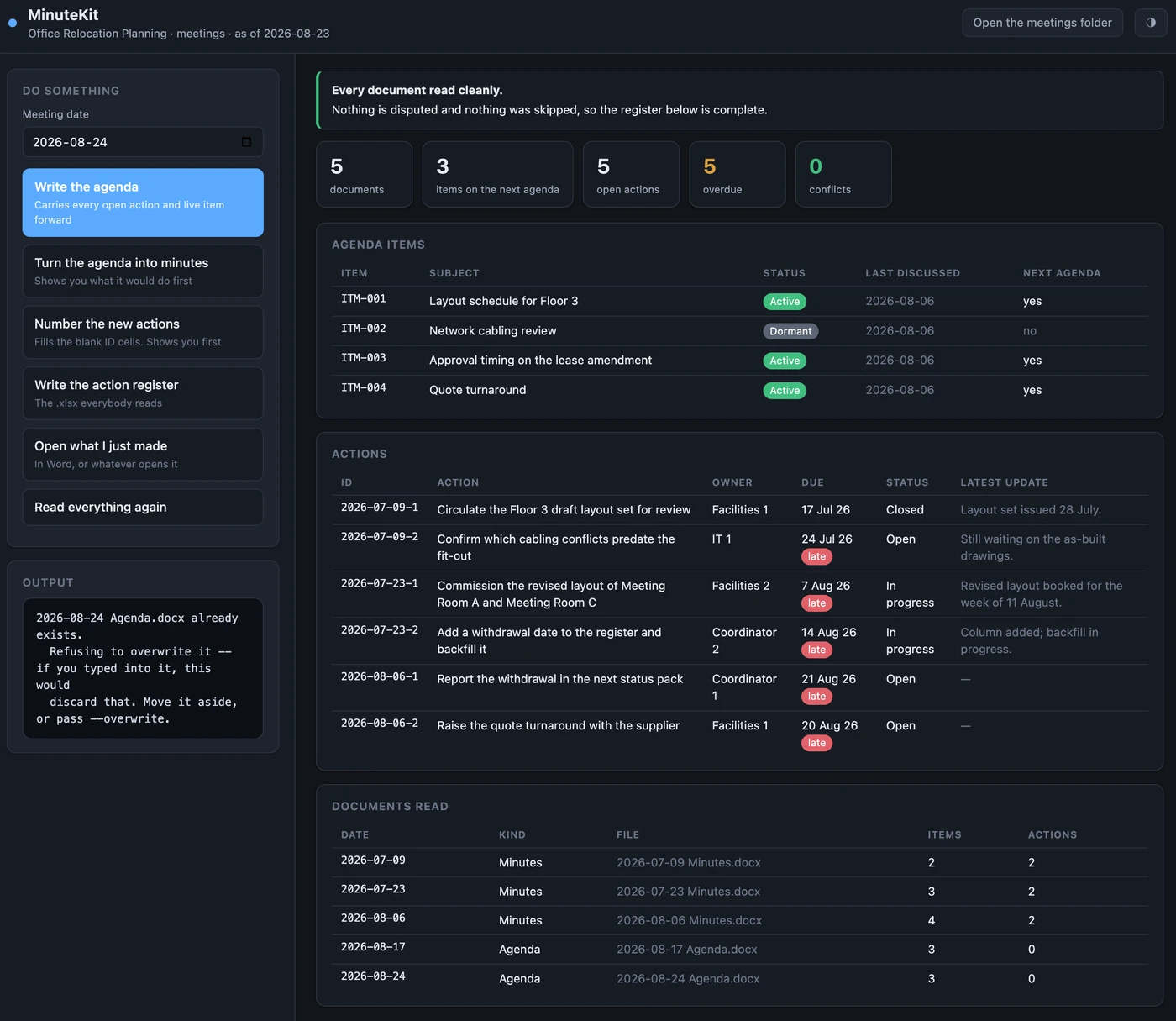
It ships with a fictional three-meeting demo series, so git clone and one command is the entire tour: carry-forward, retired numbers, overdue actions and a deliberate topic clash, all in one run — behind a single HTML page, with the command line underneath for automation.
What it does
Why you can trust a derived record
When a row doesn't parse, MinuteKit names the file, the row, and what it expected — and stops. A register that goes quietly short looks fine from the outside; refusing loudly is what keeps the derived log trustworthy.
And it never rewrites over what humans wrote: minutes are generated once as new documents, then belong to the people in the meeting.
Inside the app
Roadmap
Support this work
MinuteKit is free and stays free. If it saved you the twenty clerical minutes, you can chip in — it funds the next release.
Secure checkout on Stripe · shown in USD, or CAD in CanadaMinuteKit releases are announced in the grndtech newsletter below. To follow the code itself, watch the repo on GitHub — or read PlanLink, its sibling for spreadsheets and drawings.
Provided as is, without warranty — test against a copy of your own data before you rely on it, and before any commercial use. Accuracy of the minutes remains with the signer. Terms